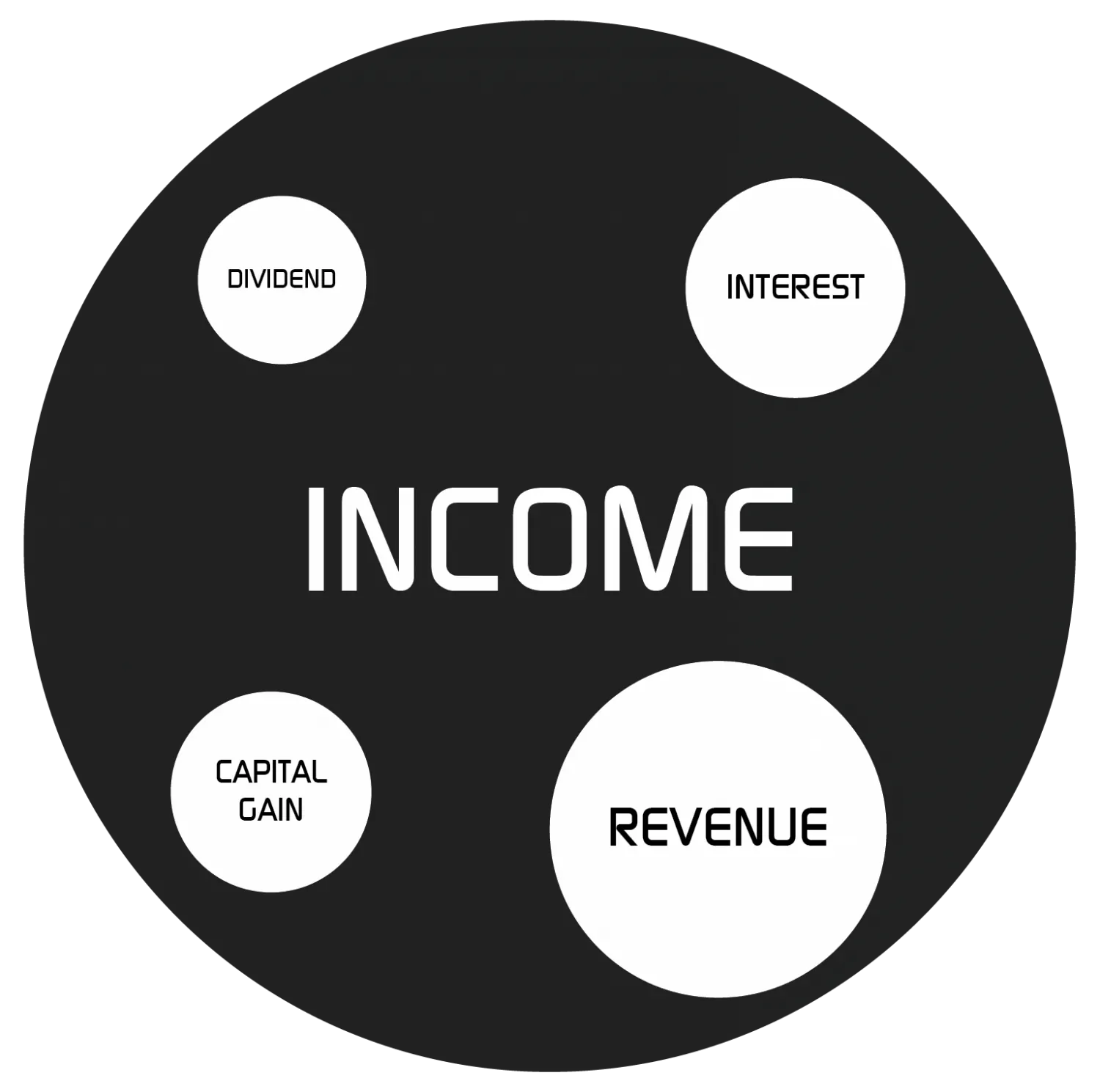

Understanding the fiscal health of a business involves delve into respective metrics, with Revenue vs Income being two of the most critical. While these terms are frequently used interchangeably, they have distinct meanings and implications for a company's financial execution. This post aims to clarify the differences between revenue and income, their import in financial describe, and how they impact business decisions.
Understanding Revenue
Revenue, also known as sales or turnover, is the total amount of money a companionship receives from its job activities before any expenses are deduct. It represents the gross inflow of cash from the sale of goods or services. Revenue is a crucial metric because it indicates the company's ability to generate sales and attract customers.
Revenue can be categorize into different types, including:
- Operating Revenue: Income generated from primary business activities.
- Non Operating Revenue: Income from subaltern activities, such as investments or rental income.
- Recurring Revenue: Income that is return regularly, such as subscription fees.
- One Time Revenue: Income from non recurring events, such as the sale of assets.
Revenue is typically recorded on the income statement and is a key component in compute other fiscal metrics, such as gross profit and net income.
Understanding Income
Income, conversely, refers to the net earnings of a company after all expenses, including cost of goods sold (COGS), control expenses, interest, and taxes, have been deduct from revenue. Income is often pertain to as net income or profit. It provides a clearer ikon of a company's financial health and profitability.
Income can be further interrupt down into different types, include:
- Gross Income: Revenue minus the cost of goods sold.
- Operating Income: Gross income minus run expenses.
- Net Income: Operating income minus non operate expenses and taxes.
Income is also recorded on the income statement and is a critical metric for investors and stakeholders who want to assess a company's profitability and financial stability.
Revenue vs Income: Key Differences
While revenue and income are both essential metrics, they serve different purposes in fiscal analysis. Here are the key differences between the two:
| Aspect | Revenue | Income |
|---|---|---|
| Definition | Total amount of money received from business activities before expenses. | Net earnings after all expenses have been deduct from revenue. |
| Calculation | Sum of all sales and other inflows. | Revenue minus all expenses, include COGS, operating expenses, interest, and taxes. |
| Purpose | Indicates the company's power to generate sales. | Provides a measure of the company's profitability. |
| Importance | Critical for assessing marketplace demand and client attraction. | Essential for value fiscal health and profitability. |
Understanding these differences is all-important for accurate fiscal analysis and decision making.
The Significance of Revenue vs Income in Financial Reporting
Both revenue and income play polar roles in fiscal reporting. They are essential components of the income statement, which is one of the primary fiscal statements used to assess a company's execution. Here s how they contribute to fiscal report:
Revenue is the commence point for the income statement. It shows the full amount of money the company has earned from its operations. This bod is crucial for translate the company's market position and sales execution. High revenue indicates potent sales and market demand, while low revenue may suggest weak sales or market challenges.
Income, specially net income, provides a comprehensive view of the company's profitability. It shows how much money the society has left after covering all its expenses. This metrical is critical for investors, creditors, and stakeholders who need to assess the company's fiscal health and potential for growth.
Financial analysts ofttimes use these metrics to reckon respective ratios and indicators, such as:
- Gross Profit Margin: (Gross Income Revenue) x 100
- Operating Profit Margin: (Operating Income Revenue) x 100
- Net Profit Margin: (Net Income Revenue) x 100
These ratios facilitate in comparing the company's execution over time and against industry benchmarks.
Note: It's significant to note that while revenue is a top line metric, income is a bottom line measured. Revenue shows the likely for profitability, while income shows the actual profitability after all costs are accounted for.
Impact on Business Decisions
Understanding the differentiation between Revenue vs Income is crucial for making inform business decisions. Here s how these metrics influence various aspects of line operations:
Strategic Planning: Revenue information helps in strategic project by providing insights into market trends and customer preferences. Companies can use this information to evolve new products, enter new markets, or adjust price strategies. Income information, conversely, helps in assessing the fiscal feasibility of strategic initiatives and ensuring that they contribute to overall profitability.
Operational Efficiency: By analyzing income, companies can identify areas where costs can be reduce without compromise revenue. This helps in improving operational efficiency and increase profitability. for representative, if run expenses are high, the society may take to streamline processes or negociate wagerer terms with suppliers.
Investment Decisions: Investors rely on income statements to value the fiscal health of a fellowship before do investment decisions. High and consistent income indicates a stable and profitable company, making it an attractive investment option. Revenue growth, while significant, is not sufficient on its own to attract investors; they also need to see that this growth translates into increased income.
Risk Management: Understanding both revenue and income helps in grapple fiscal risks. For instance, a sudden drop in revenue may indicate grocery challenges or operable issues that need to be addressed. Similarly, a decline in income may signal uprise costs or inefficiencies that ask attending.
Case Study: Analyzing Revenue vs Income
To exemplify the importance of understanding Revenue vs Income, let's study a hypothetical case study of a tech society, TechInnovate Inc.
TechInnovate Inc. describe the follow financial information for the financial year:
| Metric | Amount |
|---|---|
| Revenue | 50, 000, 000 |
| Cost of Goods Sold (COGS) | 20, 000, 000 |
| Operating Expenses | 15, 000, 000 |
| Interest Expenses | 2, 000, 000 |
| Taxes | 3, 000, 000 |
| Net Income | 10, 000, 000 |
From this information, we can see that TechInnovate Inc. yield significant revenue, but after accounting for all expenses, the net income was 10, 000, 000. This highlights the importance of grapple costs to ensure that revenue translates into income.
If TechInnovate Inc. had higher operating expenses or interest payments, the net income would be lower, even with the same revenue. This underscores the need for a balanced approach to fiscal management, concentre on both revenue generation and cost control.
By study these metrics, TechInnovate Inc. can make inform decisions about price strategies, cost management, and investment opportunities. for example, they might consider reducing function expenses by streamline processes or negotiating better terms with suppliers. Alternatively, they could invest in market to increase revenue without importantly increasing costs.
Note: It's crucial to regularly review and analyze both revenue and income to ensure that the company is on track to meet its fiscal goals. This ongoing analysis helps in name trends, address issues, and get information drive decisions.
to resume, understanding the distinction between Revenue vs Income is underlying for value a company s fiscal health and making informed line decisions. Revenue provides insights into marketplace performance and sales likely, while income offers a open image of profitability and financial constancy. By analyzing these metrics, companies can develop effective strategies for growth, efficiency, and risk management. This comprehensive translate ensures that businesses can navigate the complexities of financial management and achieve long term success.
Related Terms:
- revenue vs income departure
- annual revenue vs net income
- income vs revenue in accounting
- income vs revenue definition
- is revenue same as income
- revenue vs full income