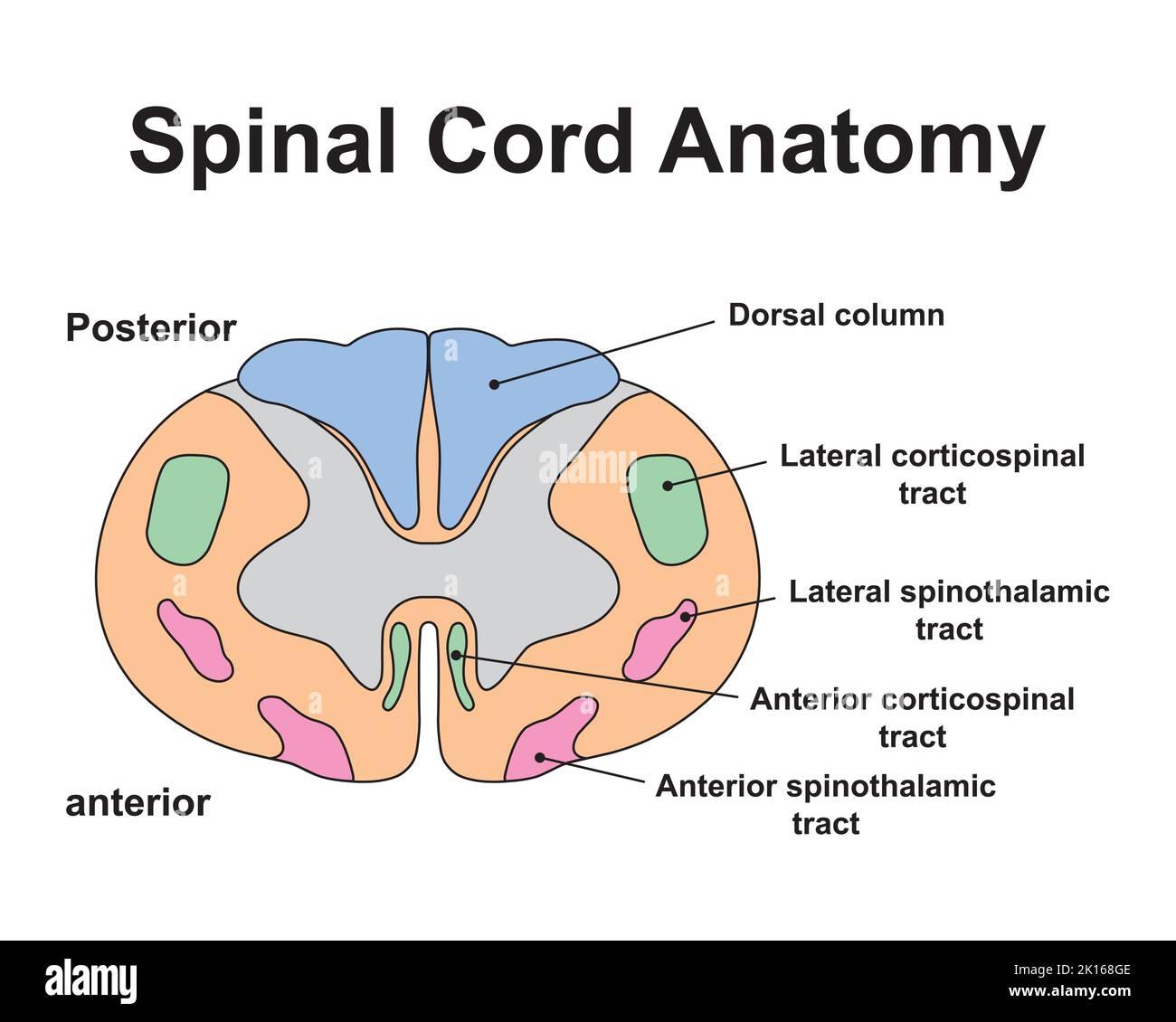

In the realm of neuroscience, the Posterior Grey Column stands as a critical structure within the spinal cord, playing a polar role in sensory treat and motor control. This region, situate in the abaxial part of the spinal cord, is essential for conduct sensory information from the periphery to the brain and for organize reflexive movements. Understanding the Posterior Grey Column provides valuable insights into the intricate workings of the queasy system and its impingement on overall bodily function.
Anatomy of the Posterior Grey Column
The Posterior Grey Column is a distinct region within the grey matter of the spinal cord. It is situated in the dorsal horn, which is the posterior part of the spinal cord's grey thing. This column is compose of respective layers of neurons and interneurons that are responsible for processing sensory info. The primary role of the Posterior Grey Column is to relay sensory information from the skin, muscles, and joints to the brain, enabling the body to respond suitably to various stimuli.
The Posterior Grey Column can be further divided into respective sub regions, each with specific functions:
- Lamina I: This layer is involved in the transmission of pain and temperature sensations.
- Lamina II: Known as the substantia gelatinosa, this layer plays a role in modulating pain signals.
- Lamina III and IV: These layers are creditworthy for processing tactile and proprioceptive information.
- Lamina V: This layer is involved in the transmittance of deep press and proprioceptive information.
Functional Significance of the Posterior Grey Column
The Posterior Grey Column is essential for several key functions within the nervous scheme:
- Sensory Processing: It acts as a relay place for sensory information, beam signals from the periphery to the brain. This includes touch, pain, temperature, and proprioception.
- Reflex Arcs: The Posterior Grey Column is involved in the shaping of reflex arcs, which are automatic responses to stimuli. for instance, the withdrawal reflex, where the body chop-chop pulls away from a painful stimulus, is mediated by this region.
- Modulation of Pain: The Posterior Grey Column contains neurons that modulate pain signals, help to modulate the percept of pain and prevent extravagant sensibility.
One of the most notable functions of the Posterior Grey Column is its role in the gate control theory of pain. This theory proposes that non awful input can close the "gates" to painful input, thus modulating the perception of pain. The substantia gelatinosa in lamina II is particularly important in this summons, as it contains inhibitory interneurons that can suppress pain signals.
Clinical Implications
The Posterior Grey Column is a target for respective clinical interventions aimed at handle pain and other sensory disorders. Understanding its structure and purpose can lead to more efficacious treatments for conditions such as continuing pain, neuropathic pain, and spinal cord injuries.
For instance, spinal cord stimulation (SCS) is a technique that involves plant electrodes in the extradural space to deliver electric impulses to the spinal cord. These impulses can inflect the activity of the Posterior Grey Column, reducing the percept of pain. Similarly, pharmacological interventions targeting the neurons in the Posterior Grey Column can help manage chronic pain conditions.
In cases of spinal cord injuries, damage to the Posterior Grey Column can result in sensory deficits and loss of reflexes. Rehabilitation efforts often focus on rejuvenate map to this region to better sensory process and motor control.
Research and Future Directions
Ongoing research continues to uncover the complexities of the Posterior Grey Column and its role in sensory treat. Advances in neuroimaging techniques, such as functional magnetic vibrancy envision (fMRI) and positron discharge tomography (PET), have provided valuable insights into the activity of this region in response to assorted stimuli.
Future research may focus on acquire more targeted therapies for pain management and sensory disorders. This could regard the use of gene therapy, stem cell therapy, or advance neuroprosthetics to restore function to the Posterior Grey Column and amend quality of life for patients with neurologic conditions.
Additionally, the study of the Posterior Grey Column in fleshly models can provide valuable information about its development and plasticity. Understanding how this region adapts to injury or disease can conduct to the development of new therapeutic strategies.
One region of particular interest is the role of the Posterior Grey Column in the development of chronic pain conditions. Chronic pain is a complex and multifaceted issue that involves both peripheral and central mechanisms. By studying the Posterior Grey Column, researchers can gain a punter interpret of how continuing pain develops and identify likely targets for intervention.
Another crucial region of inquiry is the interaction between the Posterior Grey Column and other regions of the uneasy system. The spinal cord is part of a complex network that includes the brain, peripheral nerves, and various sensory receptors. Understanding how these components interact can furnish a more comprehensive view of sensory process and motor control.
for instance, the Posterior Grey Column receives input from various sources, include the brainstem, cerebellum, and higher cortical areas. These inputs can inflect the activity of the Posterior Grey Column, influencing sensory processing and automatic movements. By canvas these interactions, researchers can gain a punter understanding of how the queasy system integrates info from multiple sources to produce coordinated responses.
besides its role in sensory treat, the Posterior Grey Column is also regard in the ordinance of autonomic functions, such as blood pressure, heart rate, and breathing. Dysfunction in this region can lead to autonomic disorders, such as orthostatic hypotension or dysautonomia. Understanding the mechanisms underlie these conditions can lead to the development of more efficient treatments.
Finally, the Posterior Grey Column plays a crucial role in the development of motor skills and coordination. Damage to this region can outcome in motor deficits, such as impuissance, spasticity, or ataxia. Rehabilitation efforts often rivet on restoring function to the Posterior Grey Column to meliorate motor control and coordination.
In summary, the Posterior Grey Column is a critical structure within the spinal cord that plays a polar role in sensory processing and motor control. Its complex anatomy and functional significance make it a target for various clinical interventions aimed at deal pain and other sensory disorders. Ongoing inquiry continues to uncover the intricacies of this region and its potential for curative applications.
Note: The info provided in this blog post is for educational purposes only and should not be used as a substitute for professional aesculapian advice. Always consult a healthcare supplier for any medical concerns or questions.
to sum, the Posterior Grey Column is a fascinating and crucial component of the nervous scheme. Its role in sensory processing, reflex arcs, and pain transition highlights its importance in keep overall bodily map. As enquiry continues to betterment, our understanding of this region will likely leave to new and modern treatments for a panoptic range of neurologic conditions. By explore the complexities of the Posterior Grey Column, we can gain valuable insights into the workings of the neural scheme and acquire more efficacious strategies for managing pain and sensory disorders.
Related Terms:
- abaxial column medial lemniscus
- where is the dorsal column
- abaxial column system pathway
- dorsal vs ventral horn
- intercede horn of spinal cord
- seat horn of spinal cord