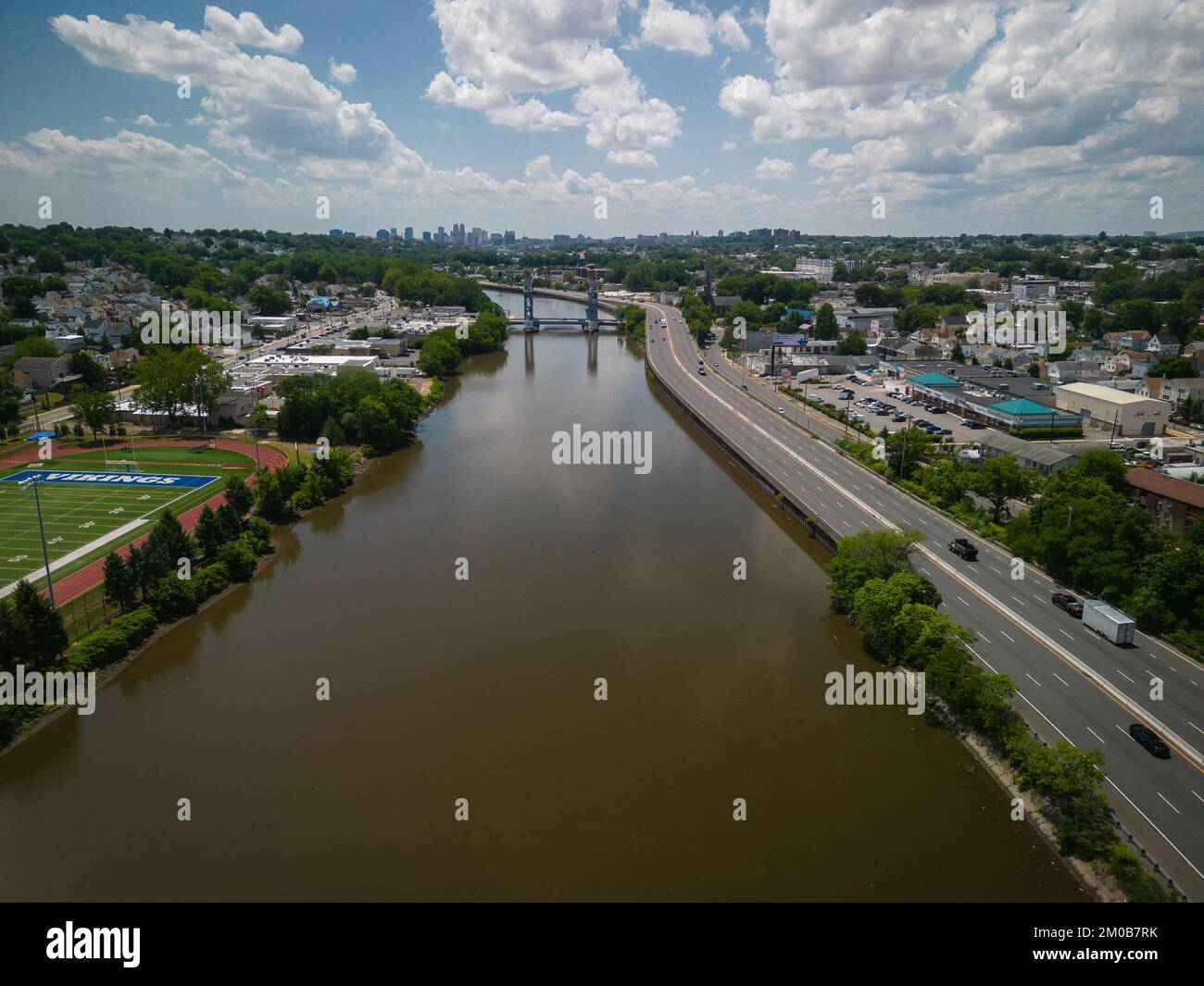

The Passaic River in New Jersey is a life-sustaining waterway that has played a significant role in the state's history, economy, and ecology. Stretching around 80 miles, the river flows through some of the most densely populate areas of New Jersey, including the cities of Paterson, Passaic, and Newark. This blog post will delve into the rich history, environmental significance, and current initiatives aimed at rejuvenate and preserving the Passaic River in New Jersey.
The Historical Significance of the Passaic River
The Passaic River has been a crucial part of New Jersey's landscape for centuries. Originally inhabited by the Lenape Native Americans, the river was later explored by European settlers in the 17th century. The river's name is derived from the Lenape word "Pahsayac", which means "valley" or "valley stream".
During the Industrial Revolution, the Passaic River became a hub for construct and industry. The river's water ability was harnessed to motor mills and factories, making it a cornerstone of the region's economical development. Cities like Paterson, known as the "Silk City", thrived due to the river's resources. The river's significance is evident in the legion historic sites and landmarks that dot its banks.
Environmental Challenges and Restoration Efforts
Despite its historic importance, the Passaic River has face significant environmental challenges. Industrial contamination, urban runoff, and improper waste disposal have taken a toll on the river's h2o quality and ecosystem. The river has been designated as one of the most polluted waterways in the United States, with high levels of contaminants such as PCBs, heavy metals, and other toxic substances.
However, there have been concerted efforts to restore and preserve the Passaic River. Various organizations, including the Passaic River Coalition and the New Jersey Department of Environmental Protection, have initiated programs to clean up the river and better its ecological health. These efforts include:
- Removal of contaminated sediments from the riverbed.
- Implementation of wastewater treatment upgrades.
- Restoration of riparian habitats to support wildlife.
- Public pedagogy campaigns to raise sentience about h2o quality issues.
One of the most celebrated projects is the Diamond Alkali Superfund Site cleanup in Newark. This site, once a major source of PCBs, has undergone extensive remediation to reduce the contamination levels in the river. The cleanup efforts have shown assure results, with better h2o quality and a revival of aquatic life in the touch areas.
Economic and Recreational Benefits
The Passaic River offers legion economical and recreational benefits to the communities along its banks. The river supports a variety of recreational activities, include fish, boating, and hike. The Passaic River Park in Paterson is a popular finish for outdoor enthusiasts, offering scenic trails and picnic areas.
Economically, the river plays a crucial role in supporting local businesses and industries. The river's water is used for various purposes, include farming, manufacturing, and energy production. The river also serves as a life-sustaining fare corridor, facilitating the movement of goods and people.
besides its economical and amateur benefits, the Passaic River is a lively source of pledge h2o for many communities in New Jersey. The river's h2o is treat and distributed to homes and businesses, ensuring a reliable supply of clean water for residents.
Community Involvement and Conservation Initiatives
Community involvement is essential for the long term success of preservation efforts along the Passaic River. Local residents, environmental groups, and government agencies work together to admonisher water quality, organise cleanup events, and push sustainable practices. These collaborative efforts help to assure that the river remains a valuable imagination for hereafter generations.
One of the key initiatives is the Passaic River Institute, a enquiry and education center consecrate to studying the river's ecosystem and promoting preservation. The institute conducts scientific inquiry, provides educational programs, and engages with the community to raise sentience about the importance of preserving the Passaic River.
Another significant first is the Passaic River Cleanup Day, an annual event where volunteers come together to remove litter and debris from the river and its banks. This event not only helps to ameliorate the river's cleanliness but also fosters a sense of community and environmental stewardship among participants.
Additionally, the Passaic River Watershed Association plays a important role in advocate for the river's health. The association works with local governments, businesses, and residents to apply policies and practices that protect the river and its surrounding ecosystems. Their efforts include:
- Advocating for stricter environmental regulations.
- Promoting sustainable land use practices.
- Organizing community events and educational programs.
These initiatives highlight the importance of community involvement in save the Passaic River. By act together, residents and organizations can ensure that the river remains a vital and thriving part of New Jersey's landscape.
Future Prospects and Sustainability
The hereafter of the Passaic River in New Jersey looks forebode, thanks to ongoing regaining efforts and community involvement. However, there are still challenges to overcome, including keep contamination and climate change impacts. To address these issues, it is essential to enforce sustainable practices and policies that protect the river and its ecosystems.
One of the key strategies is to encourage green infrastructure along the river. Green infrastructure, such as wetlands, rain gardens, and green roofs, can help to filter pollutants, trim runoff, and ameliorate water character. These natural solutions not only benefit the river but also heighten the esthetic and unpaid value of the surrounding areas.
Another significant strategy is to develop the public about the importance of h2o conservation and pollution prevention. By lift sentience and raise sustainable practices, communities can play a important role in protect the Passaic River. Educational programs, workshops, and community events can help to engage residents and foster a sense of environmental stewardship.
Furthermore, it is indispensable to support enquiry and innovation in h2o management and conservation. Scientific enquiry can furnish worthful insights into the river's ecosystem and assist to develop effective strategies for restoration and preservation. Innovative technologies, such as supercharge h2o treatment systems and monitoring tools, can also play a crucial role in amend the river's health.
to summarize, the Passaic River in New Jersey is a vital waterway with a rich history, significant environmental challenges, and promising prospects for the future. Through concerted efforts in return, community involvement, and sustainable practices, the river can proceed to thrive as a worthful imagination for generations to come. The ongoing initiatives and collaborative efforts foreground the importance of conserve the Passaic River and secure its long term sustainability.
Related Terms:
- passaic river red h2o
- passaic river map
- passaic river newark nj
- passaic river nj map
- passaic valley new jersey
- passaic river alignment nj