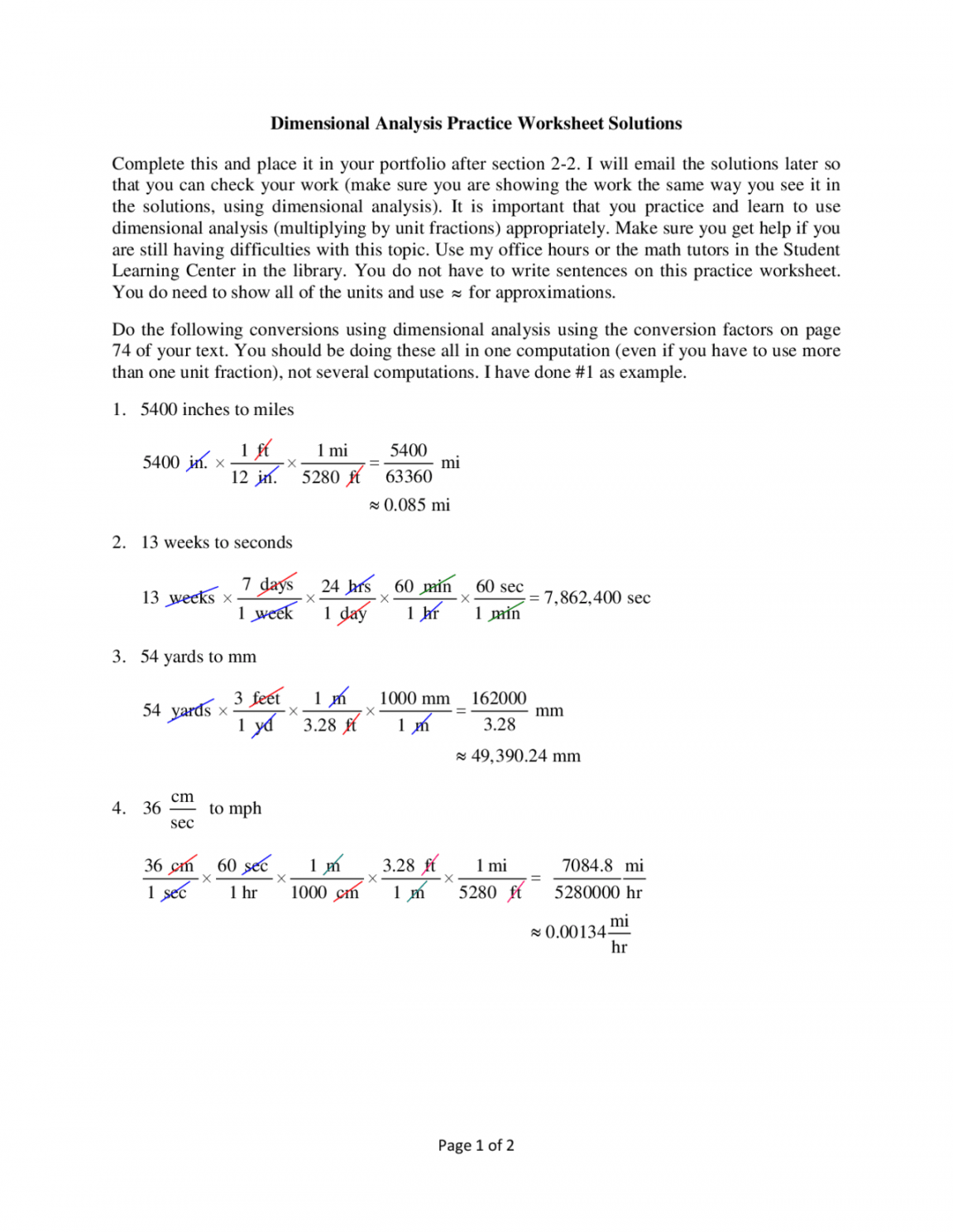

Dimensional analysis is a central concept in physics and engineer that helps in see the relationships between different physical quantities. It involves analyzing the dimensions of physical quantities to control that equations are dimensionally logical. A Dimensional Analysis Worksheet is a worthful tool for students and professionals to practice and victor this skill. This post will guidebook you through the basics of dimensional analysis, supply examples, and volunteer tips on creating an effectual Dimensional Analysis Worksheet.
Understanding Dimensional Analysis
Dimensional analysis is the process of examine the relationships between different physical quantities by place their fundamental dimensions. The most common fundamental dimensions are:
- Mass (M)
- Length (L)
- Time (T)
- Electric Current (I)
- Temperature (Θ)
- Amount of Substance (N)
- Luminous Intensity (J)
By show physical quantities in terms of these fundamental dimensions, we can ensure that equations are dimensionally consistent. This means that the dimensions on both sides of an par must match.
Importance of Dimensional Analysis
Dimensional analysis is important for several reasons:
- Error Checking: It helps in identifying errors in equations by ensuring dimensional consistency.
- Deriving New Equations: It aids in derive new equations from known ones by conserve dimensional consistency.
- Unit Conversion: It simplifies unit conversions by understanding the relationships between different units.
- Modeling and Simulation: It is crucial in modeling and simulation to ensure that the models are physically meaningful.
Steps in Dimensional Analysis
Performing dimensional analysis involves several steps. Here is a step by step guide:
- Identify the Physical Quantities: List all the physical quantities involved in the problem.
- Express in Fundamental Dimensions: Express each physical quantity in terms of the fundamental dimensions.
- Set Up the Equation: Write down the par relating the physical quantities.
- Check Dimensional Consistency: Ensure that the dimensions on both sides of the equality are the same.
- Simplify if Necessary: Simplify the equivalence if potential, while conserve dimensional consistency.
Note: Always double check your dimensions to avoid errors in your calculations.
Creating a Dimensional Analysis Worksheet
A Dimensional Analysis Worksheet is a structured document that helps in practice dimensional analysis problems. Here is how you can create an effective worksheet:
Step 1: Choose the Problems
Select a variety of problems that cover different aspects of dimensional analysis. Include problems that involve:
- Simple unit conversions
- Deriving new equations
- Checking the dimensional consistency of given equations
- Real reality applications
Step 2: Provide Clear Instructions
Include clear instructions on how to approach each trouble. This may include:
- Identifying the physical quantities
- Expressing them in fundamental dimensions
- Setting up the equating
- Checking dimensional consistency
Step 3: Include Examples
Provide examples for each type of problem to facilitate students realise the summons. Here is an model of a simple unit changeover problem:
Example: Convert 50 meters per second to kilometers per hour.
Solution:
- Identify the physical quantities: Speed (v) 50 m s
- Express in fundamental dimensions: v L T
- Set up the equating: v (m s) v (km h)
- Check dimensional consistency: 1 m s 3. 6 km h
- Simplify: 50 m s 50 3. 6 km h 180 km h
Step 4: Add Practice Problems
Include a variety of practice problems for students to solve. Here is a table with some practice problems:
| Problem | Type |
|---|---|
| Convert 100 kilometers per hour to meters per second. | Unit Conversion |
| Derive the equation for the period of a pendulum. | Deriving New Equations |
| Check the dimensional consistency of the equating F ma. | Checking Dimensional Consistency |
| Calculate the ability required to lift a 50 kg object at a rate of 2 meters per second. | Real World Application |
Step 5: Provide Solutions
Include detailed solutions for all practice problems. This helps students verify their answers and translate the correct approach.
Tips for Effective Dimensional Analysis
Here are some tips to get your dimensional analysis more effective:
- Practice Regularly: The more you practice, the punter you will get at dimensional analysis.
- Use a Worksheet: A Dimensional Analysis Worksheet can help you organize your thoughts and practice systematically.
- Check Your Work: Always double check your dimensions to ensure consistency.
- Apply to Real World Problems: Use dimensional analysis in real universe scenarios to see its practical applications.
Note: Dimensional analysis is a skill that improves with practice. Be patient and haunting.
Dimensional analysis is a powerful creature that can help you understand and resolve a wide range of problems in physics and engineering. By using a Dimensional Analysis Worksheet, you can practice and maestro this skill, ensuring that your equations are always dimensionally logical. Whether you are a student or a professional, dimensional analysis is an essential skill that will serve you well in your donnish and professional endeavors.